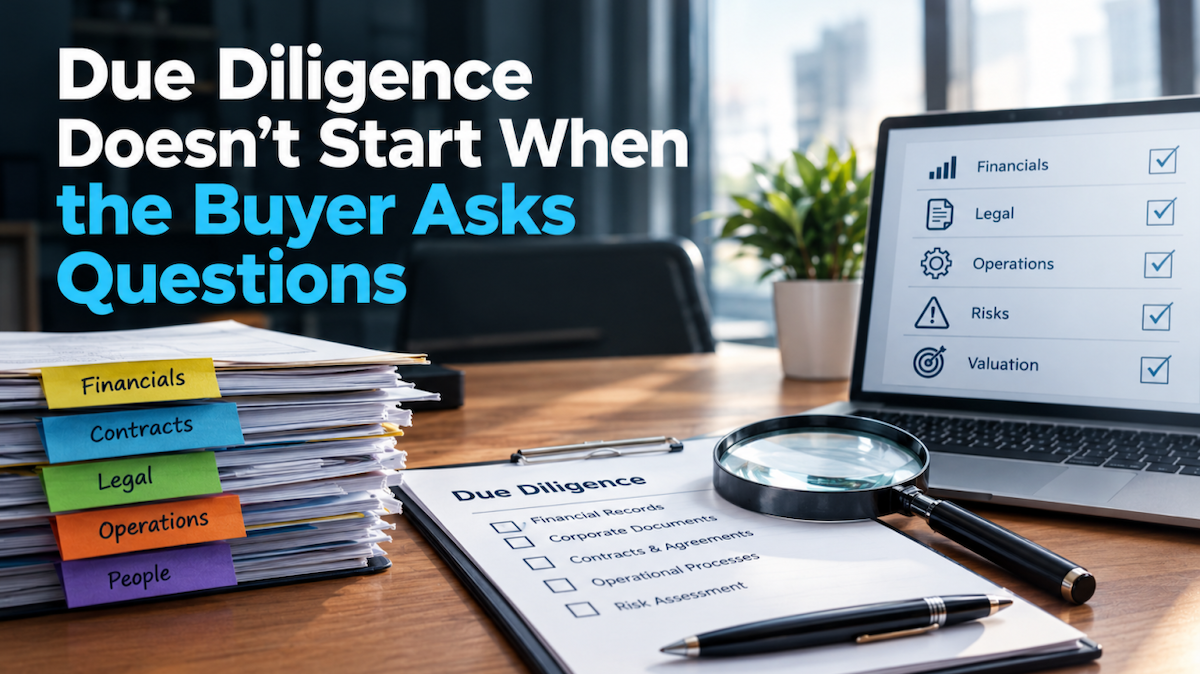


The best time to prepare your business for exit is while you still enjoy running it, not in the frantic final couple of years before a sale. Most owners instinctively focus on the transaction itself – valuation, buyers, negotiation, and the closing process – but that’s only the last chapter of the story. The real value is built in the years before a business ever goes to market, which is why so many owners leave money on the table and, in some cases, never manage to sell at all. Premium, exit‑ready businesses aren’t created in a 2–5 year sprint; they’re built deliberately over time.
The VORTEX framework
At Exit Factor, we use the VORTEX framework to help owners build businesses that are both more valuable and more enjoyable to run, long before they ever speak to a broker. VORTEX is a five‑phase roadmap: Value, Optimise, Record, Transform, and finally Exit. It’s designed to tackle the real reason so many deals fall over – you simply can’t sell chaos. When a business is wholly dependent on the owner, running on tribal knowledge, missing documented systems and clear reporting, and relying on unwritten arrangements with suppliers and customers who could disappear tomorrow, buyers get nervous. Nervous buyers either drive the price down or walk away, and those same weaknesses also make the business exhausting to own. Fixing them improves both sellability and day‑to‑day life.
The first VORTEX phase, Value, starts with understanding what you’ve actually built. Most owners ask “What is my business worth?” but a valuation number on its own is a blunt instrument. What matters is why it’s worth that amount: profitability, risk profile, how dependent the business is on you, customer concentration, leadership strength, quality of systems, and the realistic growth story. When you see your company through a buyer’s lens, you gain options. You may already be at or near your target valuation, you may discover you need more time, or you may spot hidden strengths that could command a premium if developed properly. Without this baseline, exit planning becomes guesswork.
Optimise, the second phase, is about improving profit the right way. Valuation is heavily influenced by profit multiplied by a market multiple, but optimisation isn’t endless cost‑cutting or shrinking the business to look “lean”. It’s about making the business better: reviewing pricing that hasn’t kept pace with rising wages, energy and supplier costs; using benchmarking to see how similar firms perform; and building simple weekly reporting so that what gets measured gets managed. When owners see where they’re under‑charging, over‑staffed, or missing efficiency gains, small changes often drive big improvements in profit and predictability. Regular reporting makes performance visible, creates accountability and, over time, dramatically improves value.
Record is where value becomes transferable because you’re removing owner dependence. Buyers don’t want to purchase someone else’s job; they want systems, documented operations and clear responsibilities. That means getting core processes out of people’s heads and into procedures, policies, training materials and standard operating processes that anyone competent can follow. It also means documenting key relationships properly: supplier agreements rather than assumptions, meaningful customer contracts rather than handshakes, and a leadership team and employee commitments that show the business can thrive without you in the centre of everything. This is often the single biggest shift in risk from a buyer’s perspective – and it’s one of the most liberating changes for an owner.
Once profitability is stabilised and systems are recorded, you can move into Transform – the phase where you build the intangible assets buyers really value. With fewer fires to fight, you regain headspace to think about scale, differentiation, premium pricing and capacity. Strategic positioning, strong brand, defensible intellectual property, leadership capability, customer experience and culture all make your business more attractive and less price‑sensitive. When customers choose you for a specific reason, and you can clearly articulate that story, price becomes less of a battleground and margins improve. Those improved margins, backed by a coherent growth plan, feed directly into higher valuations, although it can take six to twelve months for these efforts to show up fully in the numbers.
Only after those four phases comes Exit – the final polish. By this point your business should be more profitable, less owner‑dependent, easier to operate, better organised and far more attractive to buyers. Now, specialist brokers and M&A advisers can take the business to market, positioning it for the right type of buyer and the right sale process. Preparation still matters at this stage. Just as you’d clean a car and gather the service history before selling, your business needs its own “logbook”: up‑to‑date documentation, evidence of performance, clear systems and fast, accurate answers to due diligence questions. When information is well‑organised and risks are already addressed, buyers gain confidence – and confident buyers pay better prices on better terms.
One of the most surprising outcomes of working through VORTEX is that some owners decide not to sell, at least not yet. As chaos subsides, the business becomes more profitable, less stressful and genuinely enjoyable again. They’re no longer trapped; they have options. They can sell, scale, hand the business to family, transition ownership to employees, remain involved in a non‑executive capacity or step back gradually over time. That sense of choice is often the real reward. Maximising SME valuation isn’t just about getting a deal done; it’s about creating freedom and flexibility in how and when you exit.
For businesses in the £1 million to £30 million revenue range, one of the most valuable steps you can take now is to measure your “sellability”. Assess factors such as owner dependence, profitability, systems and processes, growth potential, strategic strengths and overall buyer attractiveness. These are the levers that determine whether your business sits in the majority that struggle to sell or in the minority that attract multiple bidders and premium offers. Crucially, they’re also the levers that dictate how enjoyable your business is to own in the years before any exit. Premium businesses aren’t built overnight; they’re built intentionally, and on that basis they don’t simply exit – they exit on their terms.
Want to know more
✅ Discover your ‘Business Sellability Score’ and determine if your business is ready for sale: Business Sellability Score
🎧 Listen to the Exit Insights Podcast
📖 Learn how to eliminate owner dependence in your business: Get your copy