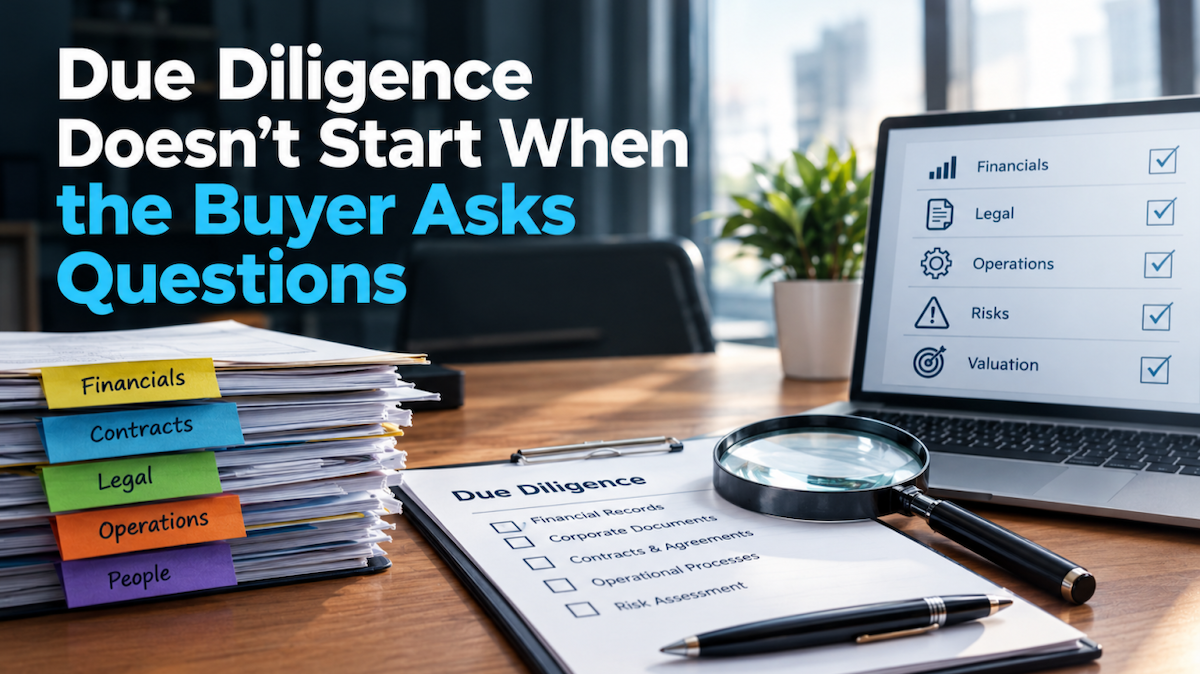


The biggest mistake happens years before you ever sell
Most business owners think about their exit when they are ready to leave. By then, it can already be too late.
The problem is not necessarily finding a buyer. It is having a business that a buyer actually wants to buy, at a price that reflects its true potential. And creating that kind of business usually takes far longer than owners expect.
Your business is not automatically worth what you think it is
There is often a significant gap between what an owner believes their business is worth and what a buyer is prepared to pay.
That gap rarely appears overnight. It is usually created by years of decisions that make the business harder to transfer: too much reliance on the owner, inconsistent processes, weak management depth, unpredictable profitability, or a customer base that depends heavily on personal relationships with the founder. None of these issues necessarily prevent a business from trading successfully, but they can materially affect its attractiveness when the time comes to sell.
This is why exit planning should not be confused with putting a business on the market. A sale is an event. Exit preparation is a process, and the earlier that process starts, the more opportunity an owner has to improve the factors that influence value.
The dangerous question is: “When do I want to sell?”
A better question is: “What would I need to change if I wanted to sell in three to five years?”
That shift in thinking can completely change the way an owner runs their business.
Instead of simply pursuing the next year’s revenue target, they can start looking at the business through a buyer’s eyes. Could someone else run it without the founder? Are the key processes documented? Is profitability strong and sustainable? Are customers loyal to the company, or primarily to the owner? Does the management team have the capability to operate the business independently?
These questions may not feel urgent when the owner has no immediate intention of selling. But that is precisely why they are so valuable. When there is time to address weaknesses, owners have far more options than when a sale is already on the horizon.
Waiting removes your negotiating power
One of the most overlooked benefits of early exit planning is that it gives the owner control.
If you suddenly decide you want to sell next year, you may find yourself making decisions under pressure. You have less time to improve profitability, reduce owner dependency, strengthen your team or address operational weaknesses. If the business is not ready, you may have to accept a lower valuation, delay the sale, or continue running a business you were hoping to leave.
Starting earlier creates a very different situation. You can make improvements because they are strategically sensible, rather than because a buyer has already identified them as problems.
The irony is that good exit planning improves the business today
Perhaps the biggest misconception about exit planning is that it is only useful for someone who is preparing to sell.
In reality, many of the things that make a business more saleable also make it more enjoyable and profitable to own. A business that does not rely entirely on its founder gives the owner more freedom. Better systems reduce operational chaos. Stronger profitability creates greater resilience. A capable management team creates capacity for growth rather than simply creating another layer of cost.
That means an owner does not have to choose between building a better business now and preparing for an eventual exit. The two objectives can work together.
And there is another important point: you do not have to sell simply because you prepared to sell. Creating a business that is genuinely saleable gives you options. You might sell, bring in investment, hand it to the next generation, appoint a managing director, or simply keep it and enjoy the freedom it creates.
The real missed opportunity is waiting until you need an exit before building a business capable of delivering one.
If you are a business owner, how far in advance do you think you should start preparing for your eventual exit?