

Most business owners assume that increasing revenue is the fastest route to increasing business value. It isn’t.
While strong sales are important, professional buyers look beyond the headline numbers. They want evidence that a business can continue to perform, grow, and generate profits without relying heavily on its current owner. In other words, they are not simply buying what your business achieved yesterday. They are investing in what they believe it can achieve tomorrow.
That distinction catches many owners by surprise.
A business generating impressive revenue can still receive a disappointing valuation if the foundations beneath those sales are weak. Buyers look for stability, predictability, and scalability. They want confidence that the business will continue delivering results after the ownership changes hands.
Revenue Gets Attention. Infrastructure Creates Value.
Think of your business as a house.
Revenue may be the attractive exterior that draws interest, but buyers will always inspect the foundations before committing. If the financial records are unclear, key processes only exist in the owner’s head, or profitability fluctuates significantly from year to year, buyers will see risk rather than opportunity.
The stronger and more predictable the underlying infrastructure, the more confidence a buyer has in the future performance of the business.
This is why businesses with similar revenues can attract dramatically different valuations. One may appear dependent on constant owner involvement, while the other demonstrates strong systems, capable leadership, and reliable financial performance. To a buyer, these are not the same assets.
Clean Financials Build Buyer Confidence
One of the first areas buyers examine is financial performance.
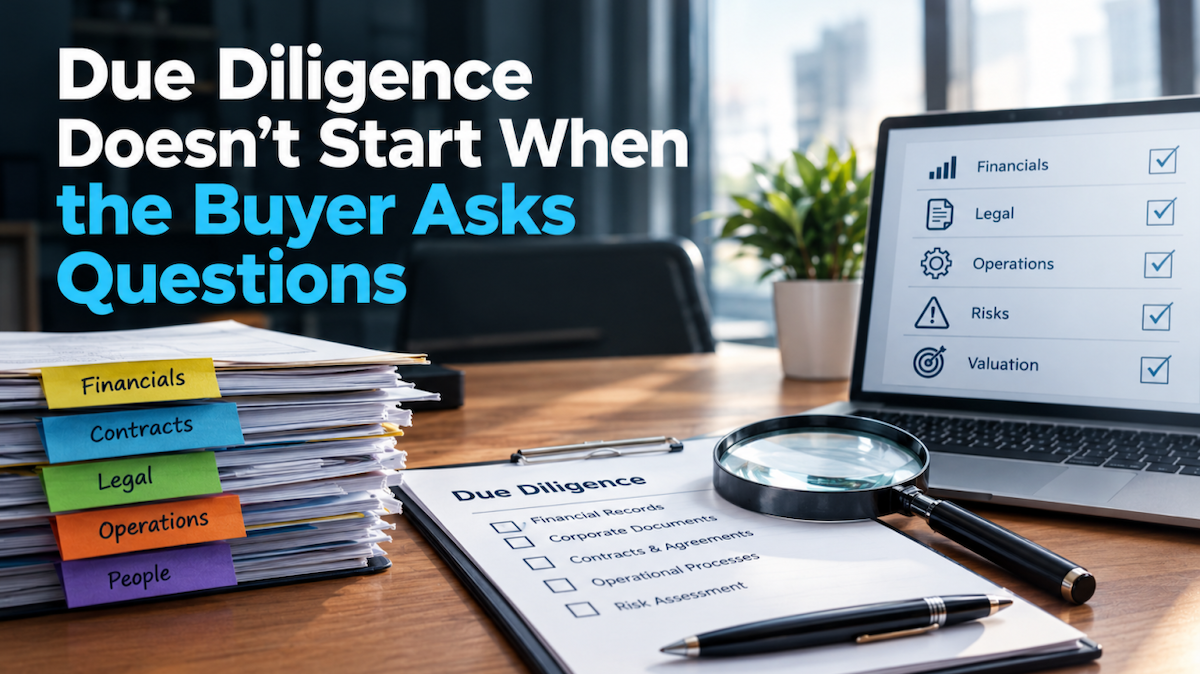
Clear, accurate financial records tell a story. They demonstrate how the business generates profit, where costs are controlled, and whether future earnings are likely to be sustainable. Strong financial reporting reduces uncertainty and makes due diligence significantly smoother.
When financial information is inconsistent, incomplete, or difficult to interpret, buyers often assume there are underlying issues, even when none exist. That uncertainty can reduce offers, delay transactions, or even stop deals altogether.
Businesses that invest in financial clarity create trust. And trust is a valuable asset during any sale process.
Scalability Is What Buyers Really Pay For
Buyers are not only interested in what your business is doing today.
They are equally interested in what it could become.
A business with documented processes, efficient operations, strong management, and opportunities for growth presents a compelling investment case. It shows a buyer that future expansion is achievable without requiring a complete rebuild of the organisation.
Scalability creates upside. And upside creates value.
The more clearly a buyer can see a path to future growth, the more attractive the business becomes in a competitive marketplace.
The Best Businesses Are Built To Thrive Without The Owner
Perhaps the most important factor of all is owner independence.
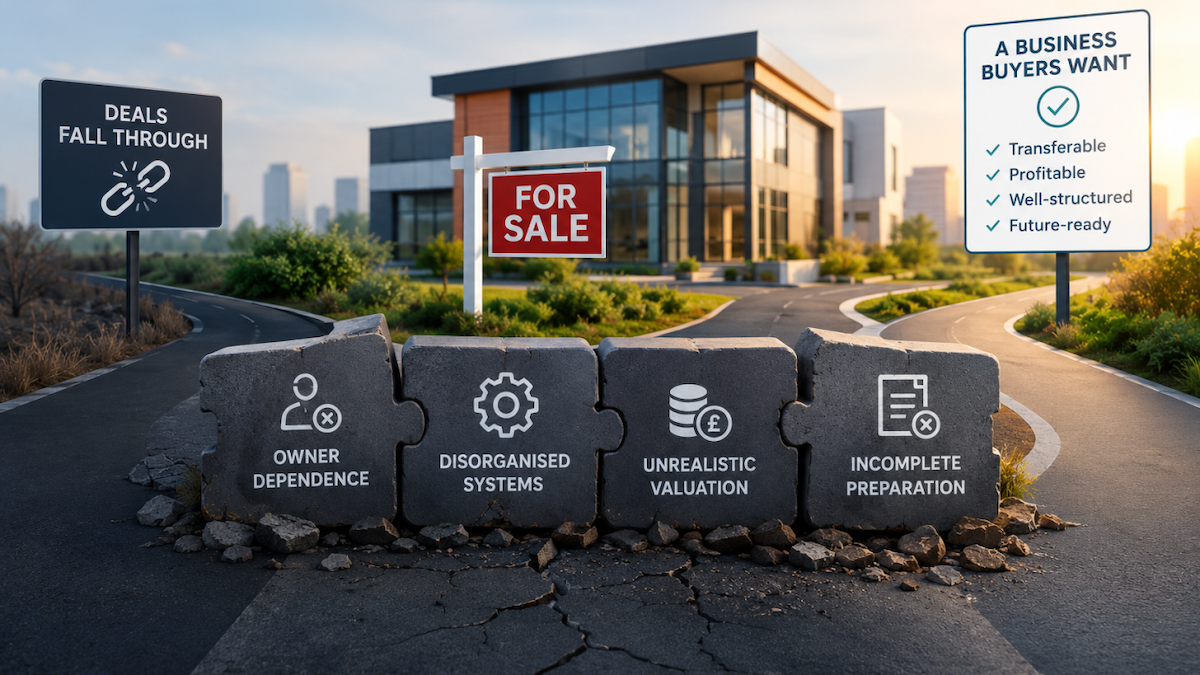
If the owner is responsible for every key decision, every major customer relationship, and every operational challenge, the business may struggle to maintain performance after a sale. Buyers recognise this risk immediately.
By contrast, businesses with empowered teams, documented systems, and strong operational structures demonstrate resilience and continuity. They can operate successfully regardless of who owns them.
Ironically, the same improvements that increase business value also make the business more enjoyable to run today. Owners gain greater freedom, teams become more capable, and growth becomes easier to sustain.
Focus on Building an Asset, Not Just a Job
The most valuable businesses are not defined by revenue alone.
They combine strong financial performance with operational efficiency, scalability, and owner independence. When these elements work together, the business becomes more than a source of income. It becomes a genuine asset that buyers are willing to pay a premium for.
Whether an exit is years away or not currently on your radar, understanding the drivers of business value can help you make better decisions today and create more options for the future.
Which do you think has the greatest impact on business value: profitability, scalability, or owner independence? I’d love to hear your perspective in the comments.